
Rhodes Piano Tines by Year: A Simple Guide
Wondering which tines belong in your Rhodes? Here’s a clear breakdown of Raymac, Torrington, Singer, and Schaller tines by year, why strike-line matters, and how to tell if you’ve got a mismatch or a faulty tine.
If you’ve ever peeked inside your Rhodes piano, you’ve probably noticed that all the tines look pretty similar. But here’s the catch: they’re not really interchangeable. Over the years, Rhodes used different suppliers, and each company made tines with slightly different tapers and strike-line requirements.
That means the tine in your piano needs to match the era of your instrument, or you’ll end up fighting sustain and tone problems.
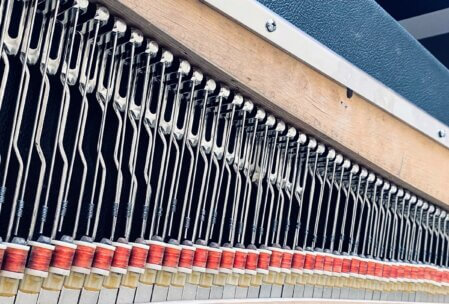
Rhodes Tines by Year
Most Rhodes harps have a four-digit date stamp in red or black ink. For example:
3474 = the 34th week of 1974.
If the stamp is missing, don’t worry — our technicians can still figure out the correct tine. Here’s the timeline of who made Rhodes tines, and when:
| Manufacturer | Years Used | What to Know |
|---|---|---|
| Raymac | Before 1971 | Found in early Fender Rhodes. Known for their warm tone. |
| Torrington | 1971–1976 | The most common tine. Balanced sustain and tone. |
| Singer | 1976–1977 | Short production run. Different strike-line than Torrington. |
| Schaller | Late 1977–mid-’80s | Used until the end of production. Stable and consistent. |
Why Strike-Line Matters
Every tine type has a “sweet spot” where the hammer should hit—the strike-line. When the hammer hits in the right place, notes sustain evenly and decay smoothly. When it doesn’t, you can get notes that choke out quickly, uneven sustain across the keyboard, harsh or dull overtones. Matching the tine to your piano’s action is a sure way to get the sound Rhodes intended for the year of manufacturing.
The Special Case of 1976
If you own a 1976 Rhodes, you may have noticed some notes ring beautifully while others just don’t cooperate. That’s because ’76 was a transition year. Many pianos from this period left the factory with a mix of Torrington and Singer tines. Since they each want a different strike-line, setup can be frustrating.
